Monday, 22 March 2021

Wells and Stiffkey with Rob Lucking

With an eye on local walks and the Honeyguide break in North Norfolk in May, Julie and I joined Rob Lucking* to visit two of his local patches.

We met in Wells-next-the-Sea and started by walking along East Quay, opposite the extensive saltmarshes that dominate this part of the coast. There were close groups of brent geese and a nice selection of waders, as you might expect, including curlews, redshanks and grey plovers.

But the star birds flew past on the landward side, over the rooftops of the quayside properties: a raven, shortly followed by a second. They were heading west and disappeared from view over the main part of Wells-next-the-Sea. It's not often that I see a new bird for Norfolk. I release that there may be readers of this blog west of Norfolk (just about everywhere!) for whom a raven is an everyday or at least a regular occurrence. Over here in the east, ravens just haven’t been part of the scene for all of my birdwatching life. That’s beginning to change now, rather like how buzzards and peregrines are now routine in the right places. There has been one pair of ravens in west Norfolk since 2018, and an increasing scatter of records elsewhere in the county.

House sparrows were nipping in and out of lobster pots piled up on the quay, much as they like to dive into the safety of thick hedges.

North Point wetlands lie immediately east of Wells. It’s a series of pools, wet in winter and spring and drying in the summer, visually rather like the scrapes at Minsmere or Titchwell Marsh. It’s new habitat created on what was, by all accounts, an area of arable that the farmer found was difficult to make pay. Natural England encouraged the landowner to create the wetlands now in place, with a modest amount of land forming and water control structures. Forgive the lack of photo: at this point of the morning, it was raining and the wind had a biting edge.

Avocets were what especially caught the eye, a couple of dozen in a tight flock. Shelducks, little egrets, black-tailed godwits and various other ducks and waders made a nice mix. Spoonbills drop in regularly: the colony at Holkham isn’t far away, but none today. There’s a patch of scrub that is alive with warblers in spring, says Rob. We retreated from the wintry weather for loos and a take-out coffee in Wells.

Saltmarsh at Stiffkey.

We drove a short distance east to Stiffkey, with some sunshine at last. There seemed to be marsh harriers everywhere, plus buzzards and a single red kite. Stiffkey Fen is more habitat creation, supported by Stewardship payments. Rob is involved with weekly monitoring visits, counting birds mostly; an area of chalk grassland provides botanical interest in summer. Today there were more avocets and black-tailed godwits, plus brent geese again on nearby saltmarsh. Happily, there is public access as the North Norfolk Coastal Path runs through the area. All too soon it was time for our picnic lunch and for parental taxi service duties for Rob.

New wetland at Stiffkey.


Highland cows at Stiffkey.

* Rob Lucking is a former RSPB colleague of Chris Durdin and a Honeyguide leader, especially from when we used to go to Lesvos. There are still vacancies on the Honeyguide break in North Norfolk that Rob is leading in May 2021.

Chris Durdin

Thursday, 18 February 2021

Notes on the 'bearded eagle’

I cannot be the only person in lockdown digging out books that are normally rarely opened, which prompts me to share an extract from Cassell’s Natural History Vol III edited by P Martin Duncan MB FRS*.

The text (including the splendid drawing shown here) runs to 3½ pages and is based on accounts by various correspondents. These two paragraphs particularly caught my eye, about the 'Bearded Eagle, or Lämmergeier’.

Line drawing scanned from Cassell’s Natural History Vol III.
‘In Algeria, the Lämmergeier is said to feed largely on Land Tortoises, which it carries to a great height in the air, and drops upon a convenient rock, so as to break the shell. So much has been written upon the habits of this bird that it would be impossible to give here one tithe of the interesting notes which have been published in various works and periodical; but no history of the species, however brief, would be complete without a passing mention of the little girl who was said to have been carried off in childhood by one of these birds. The history, believed by him to be well authenticated, is related by Naumann as follows. “Anna Zurbuchen, of Hatchern, in Bern Oberland, born in 1760, was taken out by her parents, when she was nearly three years old, when they went to collect herbs. She fell asleep, and the father put his straw hat over her face and went to his work. Shortly after, when he returned with a bundle of hay, the child was gone; and the parents and peasants sought her in vain. During this time Heinrich Michel, of Unterseen, was going on a path to Wäppesbach, and suddenly heard a child cry. He ran towards the sound, and a Bearded Vulture rose, scared by him, from a mound, and soared away over the precipice. On the extreme edge of the latter, below which a stream roared, and over whose edge any moment would have precipitated it, Michel found the child, which was uninjured, except on the left arm and hand, where the bird had probably clutched it; its shoes, stockings, and cap were gone. This occurred on the 12th of July, 1763. The place where the child was found was about 1,400 paces distant from the tarn where it had been left asleep. The child was afterwards called Lämmergeier-Anni, and married Peter Frutiger, a tailor in Gewaldswyl, where she was still living in 1814.”

‘The circumstantial way in which the above narrative runs appears to leave little doubt of its reality, but it is difficult to give it credence, as the Lämmergeier has but little power in its feet, which resemble those of the Vultures; and most of the stories of its prowess have been discredited by the researches of modern naturalists. Dr. Brehm observes: “To my intense astonishment, the Spanish hunters did not regard this bird as in the slightest degree as a bold, merciless robber: all asserted that it fed on carrion, especially bones, only attacking living animals when driven by necessity. They called it ‘Quebranta-Huesos,’ or the ‘Bone-Smasher,’ and assured me that this favourite food was broken in a singular manner. My later observations proved nothing which would justify my treating their statements as otherwise than correct, so I was forced to come to the conclusion that the Lämmergeier has been much maligned.”’

Quite an anecdote, but credit to Professor Duncan for challenging it, and to the observations of the Spanish hunters that chime with what we know now about the bearded vulture or lammergeier, a bird much appreciated by many Honeyguide groups in the Pyrenees and Crete.

* A fuller listing says edited by P Martin Duncan M.B. (Lond.), F.R.S., F.G.S., Professor of Geology in and Honorary Fellow of King’s College, London; Correspondent of the Academy of Natural Sciences, Philadelphia.


Tuesday, 9 February 2021

Vaccination progresses

“Have you had the jab yet?” It’s a regular question as my barbershop chorus meets on Zoom on a Wednesday evening. So I keep my end on mute, but it’s trickier one-to-one in break-out rooms. I am trying to master saying, “I’m too young” without sounding peeved that I look like I’m in the currently eligible over-70s demographic. I can’t blame Zoom for grey hair.

But I admit to just a little envy of those who’ve been able to get vaccinated and seeing at first-hand the steady progress of the nationwide programme. So when an email from Voluntary Norfolk arrived asking for help at a vaccination clinic withing walking distance, I was happy to accept a shift and to see how it all works, especially as requests for prescription collection/delivery have gone from very occasional (four since lockdown) to none at all.

Walking to Lionwood Medical Practice in heavy snow, I wondered what the PPE on offer would be for ‘vaccination stewarding support (patient flow)’. Snowshoes and full Arctic gear? The email warned that I might be outside and to wear appropriate clothing.

Snow and ice at the medical centre.

Actually, it was a mask, surgical gloves and yellow Covid-19 hi-vis vest. I was inside, so had strip off several layers of outdoor clothing to look after what I called the ‘departure lounge’, where those driving waited for their regulation 15 minutes before leaving. It involved showing people where they could best sit, socially distanced, where to keep an eye on the time (with help offered on the arithmetic) then cleaning seats with surgical wipes after they’d gone.

Overall impressions were as good as the reports I’d heard from others and read in the newspaper. There was an atmosphere of calm efficiency, fitting what the email had advised “as a marathon, not a sprint.” Everyone did what they were asked, some expressed grateful thanks, and some were happy to chat as far as it was possible given the spread-out seating and masks. The task was ideal for a first-time volunteer: what in my job evaluation days might be called ‘routine repetition of skills’.

A few more lines might come in handy. “Welcome to the departure lounge, your flight departs in 15 minutes” seemed OK. “There’s room to sit on the front row; you’d pay extra for that on easyJet.” “Been self-isolating anywhere nice recently?” No, I didn’t try that one.

An experienced hand thought that it was quieter than usual: about 80% turning up, given the conditions, where usually it was 95+%. It was good to see the expert advice on BBC Look East that evening that a few closed vaccination sites and no-shows was sensible and rational: a real danger from icy conditions trumps a jab that can be postponed for the theoretical risk from Covid-19.

Writing this as the vaccination total is more than 12 million, it is at last feeling like there is some hope of Honeyguide activities resuming, perhaps back to rule-of-six or similar within the UK. We’ll see what the promised ‘road map’ says later this month.

Tuesday, 26 January 2021

Keeled Skimmers in September

It was a surprise to me to find Keeled Skimmer dragonflies at Holt Country Park during three visits of Honeyguide’s Norfolk breaks in September, on 10, 17 and 24 September 2020.

When I submitted these records, I was interested to find out if this was to be expected or out of the ordinary. But first, some notes on what we saw. On 10 September there were several Keeled Skimmers, mostly blue males.

Male Keeled Skimmer, Holt Lowes, 10 September 2020 (David Bennett).

On 17 September, numbers were down to two or three though circumstances allowed a close view of a dead male trapped in a spider’s web. 

Keeled Skimmer trapped by a four spot orb web spider (Araneus quadratus), Holt County Park (=Holt Lowes SSSI), 17 September 2020 (Chris Durdin).

Finding one a week later still was a surprise, well into the second half of the month: Jean Dunn’s photograph shows the male on that date.

Male Keeled Skimmer, Holt Lowes, 24 September 2020 (Jean Dunn). The tiny round leaves are bog pimpernel.

As the British Dragonfly Society (BDS) puts it, the usual habitat for Keeled Skimmer is “pools and streams in wet heathland sites”, and it has a largely westerly distribution in the UK. However, it occurs on some wet heaths in Norfolk, including three in the eastern half of the county. The map on the NBN Atlas gives a feel for this disjunct distribution.

The main flight period shown in Smallshire & Swash is June, July and August, with light shading shown in May and September, indicating less likely periods. So how about September records in Norfolk?

Pam Taylor, BDS recorder for Norfolk, says: “I've checked back over the past 10 years, and I've plenty of late August records, plus September records for 2010, 2011, 2013, 2019 and 2020. The count was 'D' in 2010 and 'C' in 2011 [D is 21-100 individuals, C is 6-20], but both were early in the month. In 2013 there's just two records of singles on 4th and 8th September. It's not until 2019 that I get good numbers seen into mid-September and I've one other 2020 record for 7th September in addition to yours. Your records are therefore quite late for the species. That said, several other species, like Emperor and Southern Hawker, were also noted as particularly late-flying this year, so maybe it was weather related.

The visits to Holt Country Park – Holt Lowes SSSI is how it’s often known in the wildlife world – were all in the afternoon, in all cases having been at Buxton Heath during the morning. Buxton Heath is another site for Keeled Skimmers; the photograph of a female below was taken there in June 2018. We were in the area of Buxton Heath where they occur, towards the end of the morning in good weather conditions, so there is a fair chance we would have seen one if they were still on the wing.

Female Keeled Skimmer, Buxton Heath, 21 June 2018 (Chris Durdin). The 'keel' refers to the raised line along the abdomen.

Absent in September also seems to apply to Beeston and Sheringham Commons, a third Norfolk area where there are Keeled Skimmers. Francis Farrow is the man on the spot there, and he reports: “On Beeston Common I have checked back over the last 10 years and found 28 August in 2015/16/17 were the latest dates I have. Holt Lowes is tucked away over the ridge so I expect it would be a warmer site than Beeston, which may have an influence on the species. At Beeston the Keeled Skimmers were present 1989-91 then 'disappeared'. One male was seen in 2002 but it is from 2006 that the present colony has arisen. They are present in good numbers and have spread throughout Beeston and Sheringham Commons.”

Francis also says that many years ago (in the 1980s) that he came across a male Keeled Skimmer trapped by a greater sundew at Holt Lowes. Round-leaved sundews were quite a feature of Honeyguide’s September visits to Holt Lowes. To see the scarcer of the two carnivorous sundew species trapping a scarce and local dragonfly is quite a record.

So the broad conclusion is that these were late records, a combination of September’s warm weather and perhaps a micro-climate effect at Holt Lowes playing their part.

What about away from Norfolk? I asked two Honeyguiders in Cornwall if they recalled seeing Keeled Skimmers in September, and neither did. As David Collins said, that might simply be down to not going to the right places at the right time.

These were not Honeyguide’s first September Keeled Skimmers. In the Dordogne on 19 September 2019 (report here), there were Keeled Skimmers by pond at Pressignac, photographed by Kate Dalziel ‘in cop’, which goes to show that weather extends the breeding season. At the time, it has to be said, their presence was rather outshone by more glamourous southern species, namely Broad Scarlets (a.k.a. Scarlet Darters) and especially Violet Dropwing, once an African dragonfly that has moved farther north in recent years. And a good excuse to show a picture of this gorgeous dragonfly.

A pair of Keeled Skimmers in the Dordogne, 19 September 2019 (Kate Dalziel).
Violet Dropwing, the Dordogne, 19 September 2019 (Ann Greenizan).

A quick check of some records from Crete reveals Keeled Skimmers at Turkish Bridge near Monٕí Préveli on 1 May 2016 (report here) though Southern Skimmer is more usual in our late April visits.

Reference: Britain’s Dragonflies, A Field Guide to the damselflies and dragonflies of Great Britain and Ireland by Dave Smallshire and Andy Swash (WildGuides).


Monday, 14 December 2020

Upton Marshes, 14 December 2020 – Honeyguide local guided walk.

Sunshine, after a rainy night, was a welcome sight as six of us gathered at Upton Staithe car park and set off alongside Upton Dyke. Looking west, over Norfolk Wildlife Trust’s Upton Marshes, there were three distant cranes all too briefly in the air. Next to show was a marsh harrier and, while we watched that, a peregrine falcon came into the same field of view. The peregrine settled on a gate on the field, and we saw it there or nearby off and on through the morning.

Oby Mill, across the River Bure.

After we turned left along the distinctly muddy path on the river wall, most of the activity was across on the other side of the River Bure and its reedy ronds over on Clippesby and Oby Marshes. There were a few groups of pink-footed geese flying around, though nothing that compared with the flock that Howard and Sue saw by the A47 Acle Straight on their way here today. There were at least two marsh harriers and large numbers of jackdaws, rooks and starlings, though most of our effort went into trying to get a clear view of some cranes in some long vegetation near the rather distant cattle. Eventually they did show: a family party of three, then a second group of three, with the best view when all six were in flight.

It was a bit easier scanning Upton Marshes where again we found a marsh harrier and the peregrine and Daphne picked up on a distant barn owl, though that soon went from view. There were also herons, greylag and Egyptian geese and Chinese water deer.

Tall Mill, Upton.

Flocks of lapwings were often on the move, with the biggest flock in the air soon after we’d taken our next left turn by Tall Mill. This track – also often rather muddy – was between tall hedges, on which there was a flock of fieldfares. There were plenty of open areas to allow scanning towards South Walsham Marshes, and early on a superb male marsh harrier flew close by us. A kingfisher dashed through and there was a buzzard perching on a post. Ann pointed out a different raptor near yet another marsh harrier; a sparrowhawk that dropped into the trees by Upton Fen.

The best was yet to come, on the last leg overlooking the marshes. A flock of cranes came into view and flew slowly westwards. As they spread out it became easier to count them: 35 cranes, which eventually dropped out of sight onto distant marshes.

We then walked into Upton village for a drink and a snack from the community shop, over which Ann saw a butterfly flying in the winter sunshine, though too distant to identify for sure. We then walked back to the car park past bathing house sparrows, weathervanes, Christmas penguins, a sign warning us not to feed the bears and a patch of winter heliotropes. Ann and I saw a red kite on the drive home to Norwich, making it quite a day for raptors.

Can we add these to today's bird list?

House sparrows bathing in a puddle.

Half of the money brought in from this walk is earmarked for Norfolk Wildlife Trust, match funded by the Honeyguide Charitable Trust, leading to a donation of £120 for NWT.

Chris Durdin

Tuesday, 8 December 2020

Horsey seals, Honeyguide local guided walk, 7 December 2020

For our first walk after the autumn lockdown, six of us met at the National Trust’s Horsey Mill car park near the east Norfolk coast. For the early arrivals there was the distant sound of cranes bugling and the sight and sound of moving pink-footed geese.

Morning mist turned to sunshine as we found a route through a wetter than expected start to the path towards the distant dunes of sand and marram grass that make the sea defences here. Conditions then became easy once we were on the permissive path through this part of the Horsey Estate. Here three roe deer surprised us, then stood and watched us as we watched them in a field of oilseed rape.

Roe deer.

A sparrowhawk dashed away low over a crop along a hedge line then helpfully returned, the large, brown female settling in a tree. Fieldfares flew over at the same time and we had several sightings along the next part of the route. A uniformly brown marsh harrier and a male stonechat were two more good birds. Mary was alert to a yellow fungus on a tree branch in a small copse protected from browsing mammals by fencing; although it was out of reach it was close and distinctive enough to be identified as yellow brain fungus, which is parasitic on other fungi.

Yellow brain fungus (Cheryl Hunt).

Honeyguider Daphne Rumball is also a volunteer with Friends of Horsey Seals (FoHS) and she had arranged her rota to be on duty to meet us. Curiously, it was two seals in the ‘wrong’ place that took our attention to start with. One was a female that had come over the dunes and was on the inside of the fenced emergency access gap. That one would find its own way back, we were advised. Of more immediate concern was a large pup in a puddle on the track on the landward side of the high dunes. Daphne had called for some help from the chairman of FoHS and with the large board in the photo he cajoled the snarling youngster to move into the safety of the dunes.

A grey seal on the path snarls at a passing bike.

From the viewing path on the top of the high dunes, the beaches were awash with grey seals, the numbers and density reminiscent of grazing mammals on an African savannah. 

Seals as far as the eye could sea.

It was certainly peak time to be here: Daphne said that the latest count was 2900 adult seals, and the signboard on the way in said ‘pups born this year 1709’ including this week 477. Pups on the beach were of varying sizes, some very new and covered in white fur, other suckling, others bigger and at the point of being abandoned from maternal care. One bull was obviously, er, ready for mating; another, later, was in the act. Other bulls were waiting and hoping or being snarled at by females protecting their young. Daphne pointed out turnstones and sanderlings and one harbour (common) seal, this species slimmer and a more uniform colour and with a differently shaped nose when it looked towards us.

Honeyguiders overlooking the grey seal colony.

Grey seals (Cheryl Hunt).

On the return journey there were flocks of lapwings and a shaggy inkcap toadstool. We took a different route towards the end to avoid the muddiest area, bringing us alongside the road near Horsey Hall where almond-scented winter heliotrope was coming into flower on roadsides.

We took advantage of the food and drink on sale at Horsey Mill and picnic tables available in the chilly sunshine. After the group dispersed, Ann and I stopped briefly just a short distance away by the Horsey-Somerton road where there were a thousand or more pink-footed geese on a pasture on one side and a peregrine on an arable field on the other side.

Half of the money brought in from this walk was earmarked for Friends of Horsey Seals, match funded from the Honeyguide Charitable Trust, leading to a donation of £120 for the organisation that does so much to make the Horsey-Winterton coast such a haven for grey seals. Albert Ward from Friends of Horsey Seals says: “We thank you and very much appreciate the generosity of the Honeyguide Charitable Trust in making this donation.”

Chris Durdin

Grey seal (Cheryl Hunt).


Thursday, 5 November 2020

Breydon Water, Great Yarmouth and Buckenham Marshes, 3 November 2020 – Honeyguide local event.

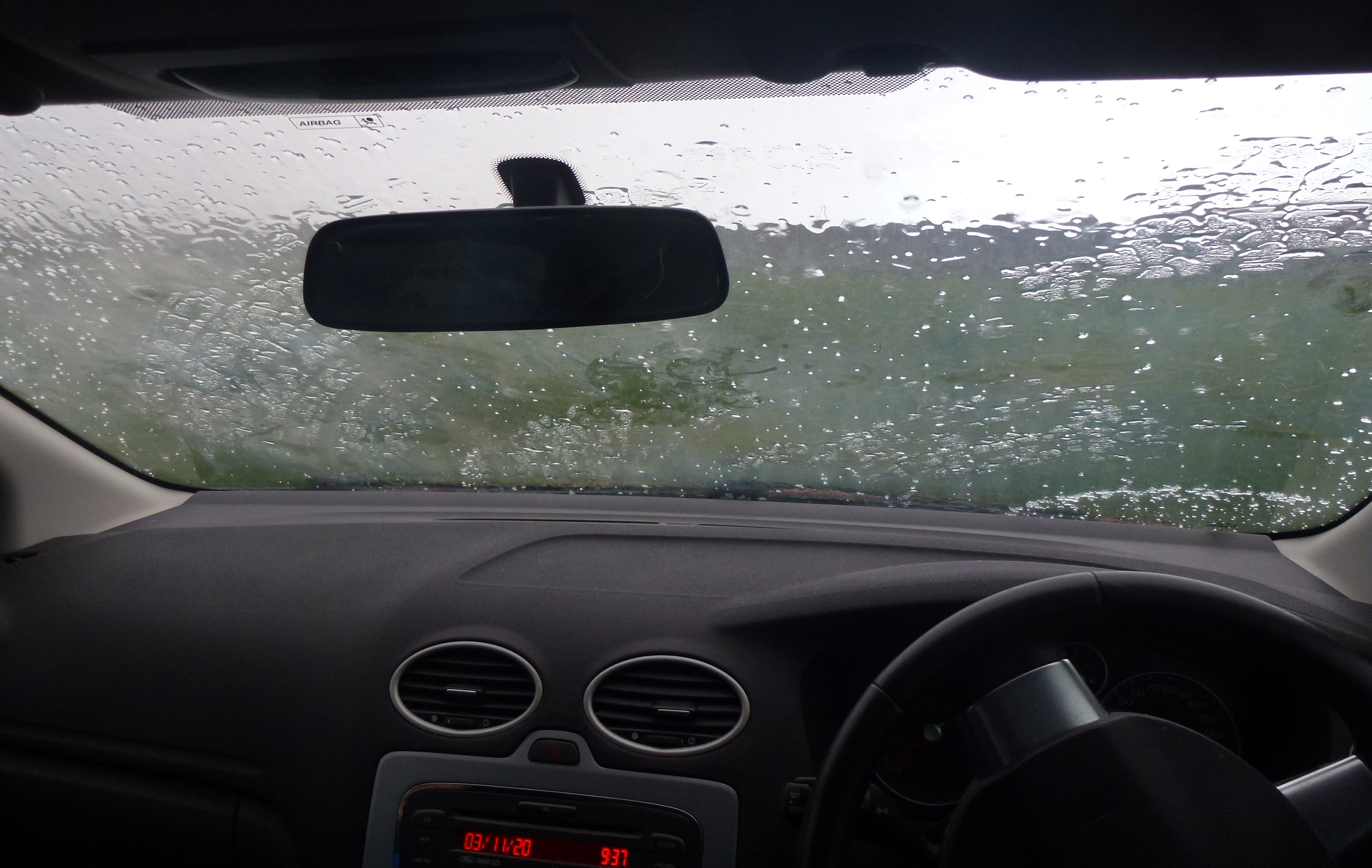
Using the long-range weather forecast to help set the next date of the weekly local Honeyguide outing – though now the last for at least a month on account of the new, imminent lockdown – was due to hit a set-back eventually, and it was raining as we assembled behind Great Yarmouth’s railway station by the sea wall in the Asda car park. The heavens opened and we retreated to cars, rain followed by hail. Happily, the downpour was sharp and short and we were soon out again, watching a flock of redshanks fly around both the flooded saltmarsh and over the car park.

A rainy start: 09:37 on 3 November 2020.

There were so many birds ahead we paused at first in the shelter of Breydon Bridge to scan the flocks of birds moving over and near the main high tide roost. These settled and we moved into the sunshine a little farther along the seawall. It was a brilliant spectacle. The largest numbers of birds in flight were wigeons, many of which settled either on the open water or in high tide pools among the saltmarsh.

Flocks of wigeon on and over Breydon Water. Look out for one redshank in flight (digiscoped).

Black-tailed godwits were the next most obvious, large groups with flashing black and white wings. Then, generally more in the distance over the estuary, tight, wheeling flocks of golden plovers, some of which came into the wader roost. In one telescope view we could see three plover species together – golden, grey and lapwings. 

There were little egrets, three around the hide area; such a routine sighting nowadays that they had little attention. With a sign on the hide saying one person only, we didn’t use it. Scanning for other birds, we looked at a curlew and, more distantly, at a shelduck and oystercatcher. Closer to us, searching through the many hundreds of wigeons, we also found lots of teals and several elegant pintails.

Male pintail (top/centre), black-tailed godwits and wigeons, digiscoped.

Groups of dunlins flew along the far edge of the saltmarsh, but disappeared from view once landed. Avocets were an obvious feature here on visits in September but they were absent today, though there was a line of black-and-white birds, this time great black-backed gulls. I focussed on one end of the gull flock where there was great black-back, lesser black-back and herring gull together.

The range of species here today may have been limited, but it was more than offset by the number and the show, enhanced by some glorious autumnal light. Some fungi in the grass on the sea wall was a little bonus: shaggy inkcaps and another species that may have been clouded funnel.

After popping into Asda to use the supermarket’s loo, we drove to Great Yarmouth seafront, parking on a side road near the model village. On the open beach north of Wellington Pier we found our target species with ease: a group of Mediterranean gulls, numbering about 30 birds. Using the not very secret trick of throwing them some bread they soon came to us, accompanied by the odd black-headed gull for comparison. Many of the Med gulls had rings; I know from what has been written that these are usually birds ringed either in the low countries or central Europe. Most were adults and a few immatures were 2nd winter birds with just a little, variable black on the wings. We walked to the seashore in case there was a wader or two – no luck there – though there was a single common gull in the middle of a large group of Mediterranean gulls, our sixth gull species of the morning. We retired to the café by the beach for a coffee or hot chocolate.

Mediterranean gull (Rob Carr) photographed on a Honeyguide Norfolk break visit to Great Yarmouth, 30 September 2020.

With lockdown due to start the day after tomorrow, for three of us we added an additional, afternoon trip to the RSPB’s Buckenham Marshes in the Mid Yare. Here we ate our picnics, in the car park, lunches packed with this plan in mind. The land is very slightly elevated just over the level crossing and from there you could see immediately it was another place that was lively with birds. Perhaps more surprising were the mammals: five Chinese water deer from that first spot and a count of at least 14 from a little farther down the track, plus two hares.

Chinese water deer with Canada geese, digiscoped. 

Buckenham Marshes today, looking towards Cantley Sugar Beet factory.
A distant peregrine falcon, digiscoped.

As during this morning, the light was wonderful and it became a little warmer in the afternoon sunshine. Inevitably here the sight and whistling sounds of wigeon were a strong feature, with some teals, gadwall and shovelers near the lagoon towards the river. There was a peregrine on one of the many gateposts, plus marsh harrier and buzzard. But if I was to choose one bird highlight it would be the golden plover flocks catching the light as they twisted and turned as we looked towards Cantley’s sugar beet factory. It became cooler and we called it a day: perhaps, all being well, there’ll be more opportunities for Honeyguide local trips in a few weeks’ time.

Chris Durdin

Spectrum, a book by Tessa Needham

Honeyguider Tessa Needham, from Norwich, has written and self-published a novel set in the Norfolk Broads. Called Spectrum , the book is aim...